
From Wartime Protection to Postwar Precarity
Memoirs of a GeishaThis thread follows the conflict between Gion’s protected world and the forces of war, occupation, and economic collapse that eventually force Sayuri to leave her geisha life and negotiate a return.
increasing Bearing strength in each event
 decreasing
Bearing strength in each eventdecreasingA Protected Enclave
A Protected Enclave
Privilege amid scarcity
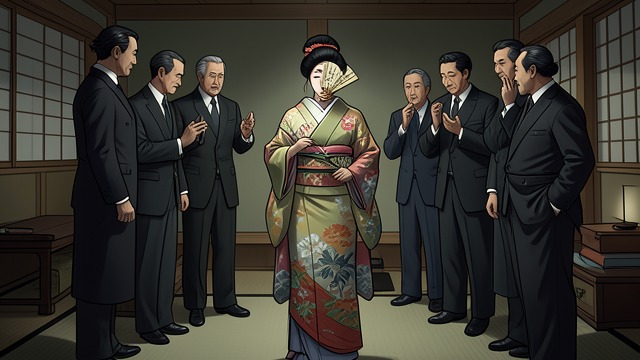
After Sayuri becomes a geisha, General Tottori’s patronage provides the okiya with food, medicine, and other supplies that ordinary households struggle to obtain. The household’s relative security depends not only on geisha earnings but on the General’s official position and influence.
Protection conceals vulnerability
The arrangement allows Mother of Nitta Okiya to believe that the war will soon end and that the household can remain sheltered from the worst shortages. Yet its safety is conditional: the same political connection that supplies food can disappear if the General loses power.
The Patron Removed
The Patron Removed
The protection collapses
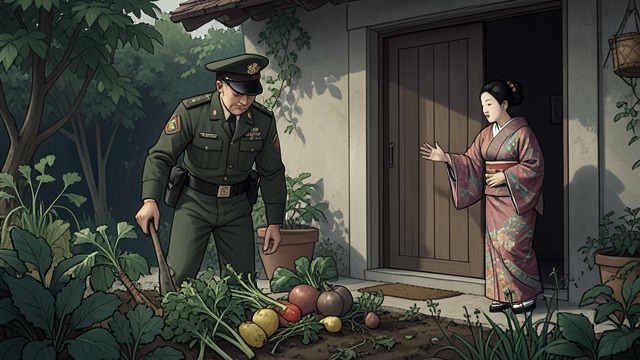
A military policeman arrives to inspect the household and challenges its failure to convert its decorative garden into a vegetable plot. Mother returns and reveals that General Tottori has been taken into custody, stripping the okiya of the protection that had allowed it to keep supplies and possessions.
Losses multiply
The household is soon forced to surrender goods and cope with restrictions that other families have already endured. The conflict is larger than any personal rivalry: the okiya’s survival now depends on adapting to a national system of rationing, confiscation, and punishment.
The Districts Close
The Districts Close
Work abolished by decree
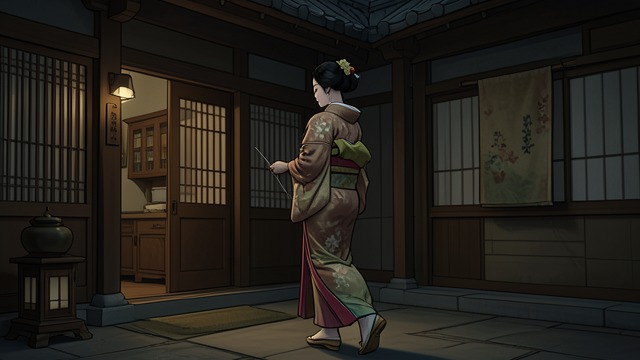
The government announces that the geisha districts are to close and orders geisha to report to the registry office. Sayuri understands that the decision threatens her livelihood and may send her to a factory, where workers endure exhausting shifts and inadequate food.
Choosing a refuge
With the General unable to help, Sayuri approaches Nobu, who arranges for her to live and work with the Arashino family. She leaves the professional world she has spent years building and takes up parachute sewing, accepting a harsh but safer alternative to factory labor.
Survival and Return
Survival and Return
A changed identity
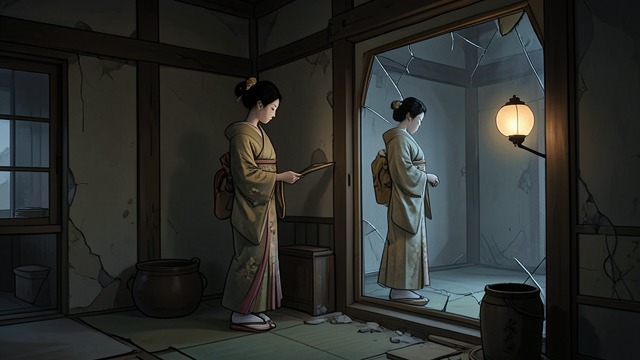
During the war, hunger and manual labor strip away the appearance and routines that had defined Sayuri as a geisha. After Japan’s surrender, she sees herself among other impoverished women and wonders whether she can still claim a professional identity that no longer shapes her daily life.
Returning to a diminished district
Nobu visits the Arashinos and presses Sayuri to return to the district after it reopens. She goes back reluctantly, finding damaged buildings, changed customs, and a less familiar community; the return restores her work but cannot restore the prewar world she left.
A Final Bargain
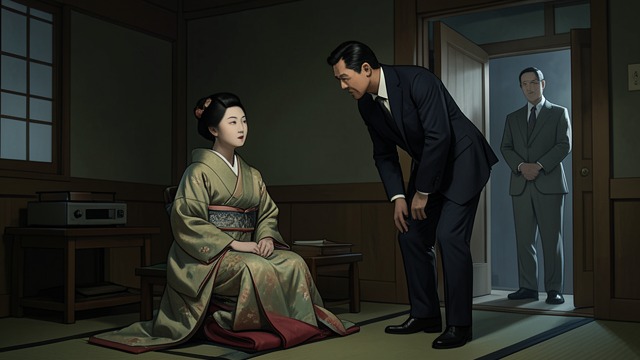
A Final Bargain
Corporate survival at stake
Nobu brings Sayuri back into the district to entertain Deputy Minister Sato, whose intervention may influence the future of Iwamura Electric. As the company’s case is reconsidered by the Occupation authorities, Sayuri’s professional labor becomes part of Nobu’s attempt to secure a favorable outcome.
Personal consequences
After the company secures financing, Nobu moves toward becoming Sayuri’s danna, while Sayuri remains emotionally committed to the Chairman. She arranges for the Minister to encounter her in a private setting so that Nobu will discover it, but Pumpkin brings the Chairman instead; the failed maneuver damages trust and leaves Sayuri to face the costs of pursuing her own future.
From 1938 through the early war years
A few weeks before New Year’s Day in December 1942
January 1944, during the final wartime years
From the end of the war through the postwar reopening
In the years after Sayuri’s return, as Iwamura Electric faces a postwar decision
